Posted: September 8th, 2010 | Author: Jeff Soo | No Comments »
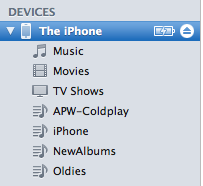 Great discovery today on Lifehacker and 9to5Mac! You can plug in any device running iOS and play music stored on the hardware in iTunes 10. In previous releases of iTunes, you would need to sync your device with that computer in order to play music, so if I were at the office and tried to play music on my iPhone that was synced at home, I would have to wipe my library. After connecting the device to the computer, cancel the sync, and expand the contents of your device in the left navigation panel. Press play and voila!
In iTunes 10, and perhaps some up-to-date iTunes 9 versions, you can now plug in an iOS device, tell iTunes to Cancel the sync request (and check off “Don’t ask again”), and from there on out simply play music or movies off whatever device you have plugged in through that iconic white cable.
I haven’t tried playing video content because I don’t have any stored on my iPhone, but I would assume it would work as well. This is definitely a feature that should have been available a long time ago, but nonetheless, glad it’s finally implemented!
Posted: September 6th, 2010 | Author: Jeff Soo | 2 Comments »
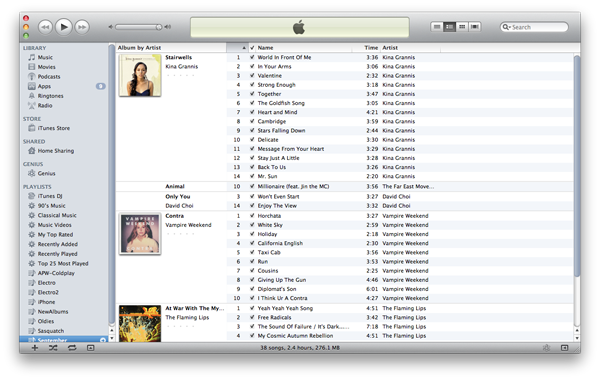
iTunes 10 is a major release from Apple. In past updates to the application, Apple introduced only new features, but this is the first in a while where the company made some radical interface changes.  The most extreme change is most notably the new dock icon, which strangely reminds me of the Windows start icon. Surely, there’s a good reason to back up the change – transition from CDs to all-digital format. But was it a good idea to change something already so memorable and associated with the iTunes brand? Since iTunes was released in 2001, the icon has consistently been a musical note on top of a compact disk. I have to admit, I haven’t been launching the app from the dock as often because my mind’s still not relating the icon to iTunes. There has been such buzz about the redesign, people have started to design their own versions and swapping them out on their own systems. Hell, there’s even a Twitter account (@itunes10icon) comically defending the change.
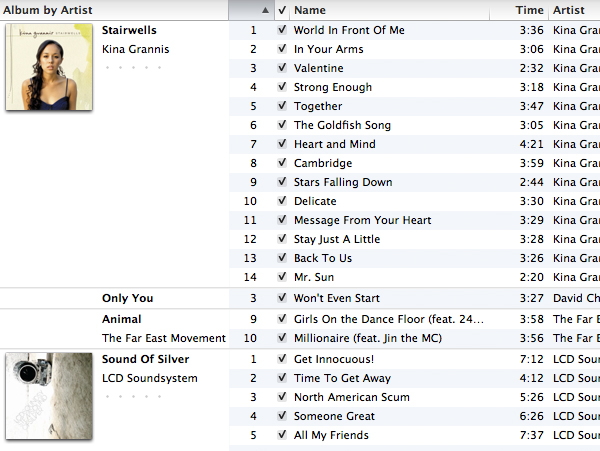
One of the newest features is a new album view that lets users see the cover of the album, in an effort to reduce redundant album titles. This view seems to only be ideal if I only have albums in my library, but in the scenario in the screenshot above, it clearly raises some issues if I only have 1 or 2 songs from an album. If there is only 1 song, only the album title is listed; 2-4 songs will show the title and artist; and the cover would only be seen if the user has at least 5 songs from that album. Chunking and drawing focus to the album and artwork, I would unnoticeably skip over the tracks that don’t have artwork because they don’t seem as important. I did notice however that this view was the default for Library, but when I changed to another playlist, I was in list view, which was a relief because my playlists don’t usually have entire albums. There is one feature that I think has the most value in this view: the ability to edit artist name or album title in-line, and have those changes apply to the entire album listing. I used to have to highlight all the tracks I wanted to edit, get info, make the changes and press apply, so reducing the workflow by more than half, makes this view a lot more useful to the user.

There have been some subtle UI changes made as well. There’s a new fatter volume bar with a shiny brushed aluminum-like scrubber, which seem to be the only instance of this type of design treatment in the entire app. One of the most obvious is the vertical layout for window controls (Close, Minimize, Maximize). Now more like a traffic light, it makes the entire application seem like it doesn’t belong to OS X, rather, like a third-party app. Because every other application running in the OS has these controls laid out horizontally, this new placement throws off the user’s perception of what they’re already used to. Maybe this is just a taste of what Apple has ready to roll out in their next OS release. There is, however, a way to revert back to the original placement:
- Quit iTunes
- Open Terminal
- Execute “defaults write com.apple.iTunes full-window -1“
- Quit Terminal and run iTunes
 The iconography in the left navigation has also made a minimal change. Originally, the icons were in color, and seemed to be more active and selectable. Desaturating the icons to be monochromatic makes these categories look inactive and inaccessible. They do make the application look a little more sophisticated and more content-centric in that color appears in only cover art and store images. Again, could this be a change that will be reflected in a future release of Mac OS, for instance, desaturated icons in the finder?
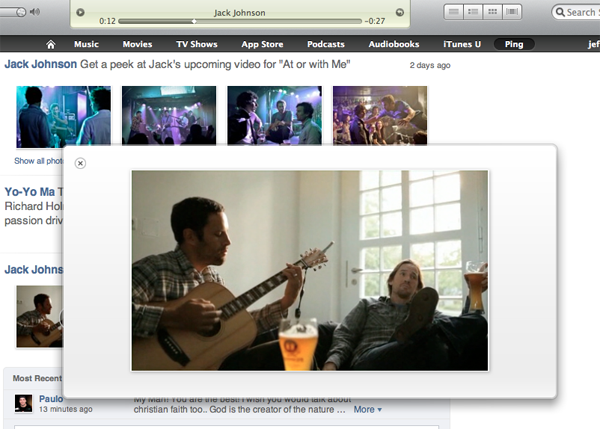
I went back to explore Ping, and quickly noticed that the modal that overlays when images and videos are selected is new. Instead of the dark-and-black lightbox-esque pop-up you would get when watching a trailer in the iTunes Store, this pop-up is white and has a glass-like border, reminiscent of Windows Vista and 7.
 When you get to the bottom of the feed, you see text for “More…” but being used to expanding feed interactions like Facebook’s or Twitter’s, I’m expecting more content to either auto-populate when I scroll down, or have an obvious button that I can click to initiate the process. iTunes doesn’t have any type of visual clue to let the user know that text is clickable. Links are blue in Ping, but not anywhere else in the iTunes Store.

Finally, I decided to plug my iPhone in to test “improved syncing.” Visually, the capacity bar is better than it was before. The previous bar was embossed and split up in segments, which I thought was useless and added unnecessary cognitive load.

The process of syncing has also made a minor change. There is now contextual confirmation that shows “Step # of 5,” reaffirming where in the process funnel the user is. Though syncing is an automated process where the user cannot navigate backwards and forwards through (only cancel), it’s nice to let them know what’s going on in the automation, and provide some clues to allow them to predict time until completion.
Overall, there are both negative and positive changes in iTunes 10, unfortunately, more of the former than the latter. There is definitely a drive to keep innovating software at Apple, but there seems to be some disconnect when unifying all of the elements that make up one product. Sure there must be different teams working on various features (iTunes Store, App Store, Ping), but they need to design more uniformly and strictly enforce a style guide to create better usability. Have you given the new update a try yet? What do you think of the new version of iTunes?
Posted: September 2nd, 2010 | Author: Jeff Soo | 1 Comment »
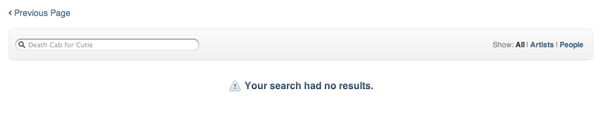
I was pretty excited to update to iTunes 10 after seeing some new UI updates and features. Aside from some interface changes (I’ll save that for another post), I wanted to get started on Ping, Apple’s “social network for music.” And then I started catching up my Twitter feed to see a few running posts by @Scobleizer pointing out one significant flaw with Ping: Artist discovery. I couldn’t believe the names he was tweeting: Black Eyed Peas, Daft Punk, Madonna… So I gave it a try as well, searching around 15 headline-caliber artists, and what do you know? “Your search had no results.”
Was it too early to release Ping? Should Apple have waited a while to get more artists onboard? Definitely. After registration, Ping recommended only 12 artists to me, and I only chose 2 or 3 to follow. On top of that, I’ve been reading Facebook Connect has been axed (for now) due to “onerous terms.” On the contrary, there are features that are pretty useful – concert tickets, especially. I’ve read reports that Apple was working on a partnership with LiveNation, but after clicking on the tickets link for a Jack Johnson concert, I was redirected to Ticketmaster.com. If in-app ticket purchasing is in the horizon, I could see it being a useful tool. We’ll see what happens in a few months, but for now, Facebook Pages, with a larger database of artists and essentially offering the same content, is shining.

Update: Just read on Engadget
Facebook’s friend-finding API is generally open access, but anyone that wants to hit it an extreme number of times has to sign a deal agreeing to protect Facebook user data and limit network impact. Given the sheer size of the iTunes customer base, it’s no surprise that Facebook wanted such a deal, but apparently negotiations broke down — possibly over what Steve Jobs referred to as “onerous terms” — and Apple decided to just go ahead and use the API anyway.
Posted: August 15th, 2010 | Author: Jeff Soo | 1 Comment »
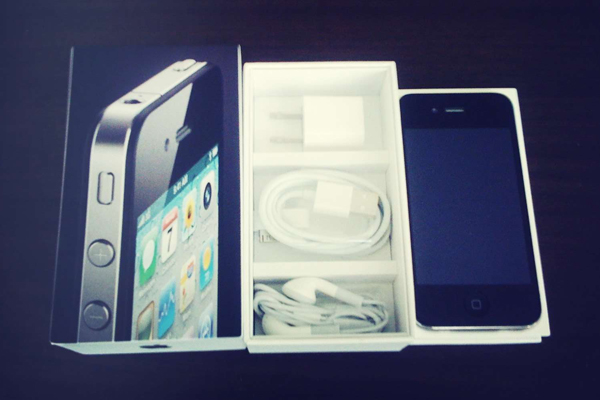
It was nearly a month ago when I got the email “Your iPhone is waiting at the Apple Store” from the Apple Store. My friend and I quickly took the train down to SoHo so I could finally become a proud iPhone 4 owner. From the issues I kept running into on my iPhone 3g running iOS4 I couldn’t be any happier with new hardware that could handle the new features in the OS. The retina display and the speed alone completely obliterated my 2nd generation iPhone. With the exception of changing the word “Delete” to “Archive” in emails, Apple has really mastered the UX of the touch interface to the point where even babies can use it.
Even though the iPhone 4 is a 4th generation iPhone, the complete redesign of the hardware technically makes it the 1st generation of its respective form factor. And I guess that’s what puts early adopters in such a risky position. I’ve had my fair share of 1st gen issues, especially on the 1st gen iPod Touch and it’s “negative black” effect. But I got it replaced, and had no more issues. From yellow screens to the now infamous “antennagate,” it’s pretty obvious that iPhone 4 hardware design is flawed.
The first day I got the phone, I noticed something was already wrong with the unit. When we got out the subway station, the phone would not connect back to the network, and would read “No Signal.” I was confused, asking my friend if she had signal on her phone and wondering if it was just because we were in a spot with terrible reception. No, in fact she had full bars. I restarted the phone and was back on the network, so I shrugged that issue off. Then it happened again, and again, and again, every time I was coming out of subway stations.
I brought the issue up with a Genius at the Genius Bar and he decided to reset the network settings and told me to restore the phone if it was still happening, but he noticed that the reception on the phone was acting a little more strange than other iPhones. I found it extremely amusing that he was testing reception issues and showing me how other iPhone 4s should act by holding it in the “death grip.” He took note of the issue and told me that if the problem still persisted, to come back and to get it swapped.
Low and behold, still got the problem, even after a restore, so I took it in for a swap. Another Genius read the notes that the first one left and after hesitating and making me seem like I was just trying anything to get a new device, decided to give me a “1-time courtesy replacement” as if he was doing me a favor. So I was on my 2nd device now, and extremely happy I didn’t have this “No Signal” issue anymore. However, I did notice that the battery life was much more terrible than my 1st device. Then I started making phone calls and as if the phone was a zombie, started dropping calls or switching to speakerphone during conversation. Another widespread issue, proximity sensor.
And then the reoccurring rumors of the fabled CDMA iPhone started flying again. I never had issues with the carrier, but as I was reading a particular article, this particular excerpt stood out:
Sources with knowledge of this entire situation have assured me that Apple has submitted orders for millions of units of Qualcomm CDMA chipsets for a Verizon iPhone run due in December. This production run would likely be for a January launch, and I’d bet the phone is nearly 100% consistent with the current iPhone 4 (with a fixed internal insulator on the antenna).
Could it be that Apple was revising the hardware design? I quickly became optimistic and decided that maybe it was time to return my iPhone before my 30-days was up, and wait it out for a few months to see if they really do come out with a fix. So I packed everything back up in the box, headed down to SoHo and returned the iPhone 4.
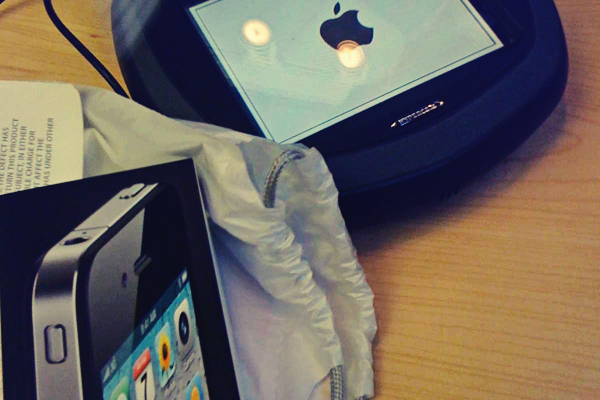
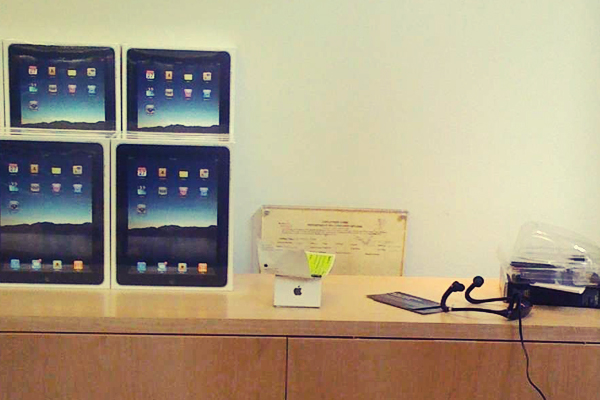
So I’m back using the iPhone 3g, enduring the sluggishness of iOS4, and staying optimistic that I’ll have an iPhone 4 again in the future.
Update: Erik just told me that you can change “Archive” back to “Delete” in the mail settings. Apparently “Archive” would move emails from your inbox into another folder for “All Mail.” Here’s the tutorial I found on how to revert back to the “Delete” process: http://www.gilsmethod.com/delete-gmail-emails-ios4
